
产品中心
产品详情
中谱橙 Homo-COOH 羧基磁珠
所属分类:
中谱橙磁珠系列
关键字:
中谱橙 Homo-COOH 羧基磁珠
产品说明
中谱橙化学发光磁珠
(尺寸1.0um、2.8um和4.5um)
中谱橙 Homo-COOH 羧基磁珠
一、概述
中谱橙 Homo-COOH磁珠提供永久结合和固定各种含胺基配体。 珠子表面上的高密度羧酸基团(COOH)可用于配体如蛋白质、肽和核酸的共价偶联。 用EDC活化珠表面上的羧基,使配体通过伯胺基与磁珠偶联,形成稳定的酰胺键。 中谱橙 Homo-COOH是均匀的PS/GMA共聚超顺磁珠,适用于各种磁性分离应用,包括亲和力富集、蛋白质纯化、免疫沉淀和细胞分选。
二、产品特性
1. 中谱橙 HomoS-COOH短链羧基磁珠
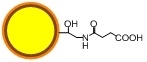
基团密度> 400 umoles carboxylic acid/g beads
2. 中谱橙 HomoL-COOH长链羧基磁珠
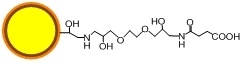
基团密度> 200 μmoles carboxylic acid/g beads
形态:超顺磁球形
直径:1μm
储存:10 mg/mL ,去离子水中 2~8 °C保存,勿冻结。
常温运输,正确使用保存期一年。
三、缓冲液
Coupling Buffer(偶联缓冲液):
50 mM MES [2-(N-morpholino)-ethanesulfonic acid], pH 6.0, 0.01% Triton X-100;
Coupling Agent(偶联试剂):
EDC [1-ethyl-3-(3-dimethyaminopropyl)-carbodiimide];
Sulfo-NHS [N-hydroxysulfosuccinimide] (Optional)
Quench Buffer(淬灭缓冲液):
TBS (25 mM Tris-Cl, 130 mM NaCl, 2.7 mM KCl), pH 8, 0.01% Triton X-100;
Storage Buffer(储存缓冲液):
TBS or PBS containing 0.01% Triton X-100 or 0.01% Tween 20. Add preservative if needed.
四、中谱橙 Homo-COOH的使用
以下方案为配体与100μL的中谱橙 Homo -COOH羧基磁珠的偶联方案。该方案可按需放大或缩小。强烈建议对珠子活化(EDC、EDC / NHS和pH)和偶联条件(配体浓度、偶联缓冲液、pH、反应体积和温育时间)进行优化。
注意:
■ 通过涡旋确保磁珠均匀悬浮。
■ 为获得最佳性能,在无胺偶联缓冲液中偶联,蛋白应为0.5〜4mg / mL,寡核苷酸为20〜100μM,不含其它蛋白。较高浓度的蛋白可灵活地优化反应体积。含tris、甘氨酸、醋酸盐或柠檬酸盐的缓冲液不能使用。
■ 含有0.01%的Triton X-100的50 mM MES缓冲液(pH 6.0)可用作活化和偶联缓冲液。当使用化学合成的寡核苷酸时,寡核苷酸末端应有5'-胺基以偶联磁珠。
■ 珠子含有0.5%SDS以稳定悬浮液。尽管非必须,但在所有缓冲液中包含0.01〜0.05%Triton X-100或0.01〜0.05%吐温20将防止珠粒凝结并改善分散特性。
偶联方案A:使用EDC的两步偶联
该方案被推荐用于将蛋白偶联到羧基磁珠上。首先使用水溶性碳二亚胺(EDC)活化珠上的羧基以形成胺反应性中间体。除去EDC后,加入蛋白质配体并通过蛋白质上的伯胺与磁珠的活化羧基偶联。
1. 确保蛋白或配体在无胺偶联缓冲液中。100μL偶联缓冲液中需50〜400μg蛋白用于耦合。放在冰上。
2. 涡旋振荡重悬中谱橙 Homo-COOH羧基磁珠。吸取100μL磁珠到1.5mL EP管中,磁分离并吸弃上清。
3. 加入200μL偶联缓冲液,涡旋20秒洗涤磁珠,磁分离并吸弃上清。
4. 按步骤3再次清洗羧基磁珠两次。
5. 使用前用偶联缓冲液中配制EDC(50 mg / mL)。
6. 向磁珠中加入80μL偶联缓冲液和20μL新配的EDC溶液,混匀。室温孵育15分钟,磁分离并吸弃上清。
7. 用200μL偶联缓冲液清洗磁珠,磁分离并吸弃上清。
注意:该步骤应该快速进行,因为磁珠上的胺反应性中间体不稳定。
8. 向羧基磁珠加入100μL偶联缓冲液和50〜400μg蛋白质或配体,涡旋混匀。
9. 室温下孵育30分钟。根据配体和浓度的不同,最佳孵育时间可能为0.5〜4小时。
10. 将试管放入磁力架中,磁分离并吸弃上清。该上清液含有未结合的配体,如果优化方案可保存用于分析。
11. 向羧基磁珠加入500μL淬灭缓冲液。涡旋20秒,磁分离并吸弃上清。
12. 向羧基磁珠加入500μL淬灭缓冲液。室温孵育30〜60分钟。磁分离并吸弃上清。
13. 向羧基磁珠加入500μL淬灭缓冲液。剧烈漩涡20秒,磁分离并吸弃上清。按该步骤再洗两次磁珠。
14. 从磁力架上取下EP管。添加100μL存储缓冲液。涡旋混合并在2〜8°C储存偶联好的磁珠。
偶联方案B:用sulfo-NHS替代两步偶联
该方案与上述方案类似,但使用NHS。可通过加入稳定胺反应性中间体的sulfo-NHS来增加EDC介导的反应的效率。
1. 确保蛋白或配体在无胺偶联缓冲液中。100μL偶联缓冲液中需50〜400μg蛋白用于耦合。放在冰上。
2. 涡旋振荡重悬中谱橙 Homo-COOH羧基磁珠。吸取100μL磁珠到1.5mL的EP管中,磁分离吸弃上清。
3. 加入200μL偶联缓冲液。剧烈漩涡20秒,磁分离并吸弃上清。
4. 按步骤3再清洗羧基磁珠两次。
5. 使用前用偶联缓冲液中配制EDC(50 mg / mL)。在使用前用偶联缓冲液配制Sulfo-NHS(50mg / mL)。
6. 向磁珠中加入60μL偶联缓冲液、20μL新配的EDC溶液和20μL新配的Sulfo-NHS溶液。涡旋混匀。
7. 室温下混匀孵育15分钟。磁分离并吸弃上清。
8. 用200μL偶联缓冲液清洗磁珠。涡旋混匀,磁分离并吸弃上清。
9. 加入100μL偶联缓冲液和50〜400μg蛋白或配体。涡旋混匀。在室温下连续混合孵育0.5〜4小时。
10. 将试管放入磁力架中,磁分离并吸弃上清。该上清液含未结合的配体,如果优化方案可保存用于分析。
11. 向羧基磁珠加入250μL淬灭缓冲液。涡旋20秒,磁分离并吸弃上清。
12. 向羧基磁珠加入500μL淬灭缓冲液。室温孵育30〜60分钟。磁分离并吸弃上清。
13. 向羧基磁珠加入250μL淬灭缓冲液。剧烈漩涡20秒,磁分离并吸弃上清。
14. 从磁力架上取下EP管。添加100μL存储缓冲液。涡旋混合并在2〜8°C储存偶联好的磁珠。
偶联方案C:一步偶联
这是一个快速结合方案,在一个反应中同时加入羧基磁珠、EDC和配体。该方案最适合偶联寡核苷酸和小分子,当配体上的羧酸基团的激活不会影响后续实验时。
1. 确保蛋白或配体在无胺偶联缓冲液中。100μL偶联缓冲液中需50〜400μg蛋白或1〜5nmol寡核苷酸进行偶联。放在冰上。
2. 涡旋振荡重悬中谱橙 Homo-COOH羧基磁珠。吸取100μL磁珠到1.5mL的EP管中,磁分离吸弃上清。
3. 加入200μL偶联缓冲液。剧烈漩涡20秒,磁分离并吸弃上清。
4. 按步骤3再清洗羧基磁珠两次。
5. 从磁力架上取下EP管。在80μL偶联缓冲液中加入50〜400μg配体。
6. 在室温下孵育30分钟。
7. 使用前用偶联缓冲液配制EDC(50 mg / mL)。
8. 将20μL新配的EDC溶液加入磁珠中。涡旋混匀,室温下连续混合孵育0.5〜4小时。
9. 将试管放入磁力架中,磁分离并吸弃上清。该上清含未结合的配体,如果优化方案可以保存用于分析。
10. 向羧基磁珠加入500μL淬灭缓冲液。涡旋20秒,磁分离并吸弃上清。
11. 向羧基磁珠加入500μL淬灭缓冲液。室温孵育30〜60分钟。磁分离并吸弃上清。
12. 向羧基磁珠加入500μL淬灭缓冲液。剧烈漩涡20秒,磁分离并吸弃上清。按该步骤再洗两次磁珠。
13. 从磁力架上取下EP管。添加100μL存储缓冲液。涡旋混合并在2〜8°C储存偶联好的磁珠。
中谱橙™ Homo-Streptavidin Beads
(链酶亲和素磁珠)
中谱橙™ Homo-Streptavidin (SA) Beads are ideal for nucleic acid diagnostics, specifically with samples with a high chaotropic salt concentration, immunoassays involving small biotinylated antigens and applications that are not compatible with BSA (these beads are not blocked with BSA). Homo-Streptavidin Beads offer increased binding capacity and slower sedimentation rate.
Add SA Beads to a sample containing biotinylated molecules such as peptides, oligonucleotides etc. During a short incubation, the biotinylated molecule will bind to the beads. Separate the molecule-bead complex with a magnet. Capture, washing and detection can be optimized for manual or automated use. With indirect capture, mix the biotinylated molecule with the sample to capture the molecule target complex before adding beads. Indirect target capture is an advantage when molecule-target kinetics are slow, affinity is weak, molecule concentration is low or molecule target binding requires optimal molecule orientation and true liquid-phase kinetics. Due to their high surface area per weight, uniformity, excellent batch reproducibility and ease of adaptation to automated processes, 中谱橙 beads have become the solid phase of choice for developing immunoassays (/IVD).
Product information
Diameter: 1 μm (Core-shell GMA particle)
Concentration: 10 mg/ml
Ligand: Streptavidin
Type Magnetization: Superparamagnetism
Store at 2-8°C(up to 6 months)in Storage Buffer (25 mM tris-HCl, 0.15 M NaCl, 0.05% tween20, 0.05% NaN3, pH 7.2). Do not freeze the reagent.
Binding capacity
| Free Biotin | > 2500 pmol |
| Biotinylated peptides | ~ 400 pmol |
| Biotinylated antibody | up to 20 pmol |
| ds DNA | ~ 20μg |
| ss oligonucleotides | ~ 500 pmol |
| * Oligonucleotides and DNA fragments | |
Recommended buffers and solutions
| For coupling of Nucleic Acids | For beads treatment before RNA manipulations | For coupling of protein or other molecules |
How to use this product
Critical Notes
In the protocols we recommend keeping the tube on the magnet for up to 2 mins to ensure that all the beads are collected on the tube wall. For non-viscous samples, separation is often complete in under 1 min, once you can see the beads collected.
For diluted samples increase the incubation time or isolate in smaller batches using the same beads in each batch.
Use a mixer to tilt/rotate the tubes so 中谱橙 beads do not settle at the tube bottom.
Avoid air bubbles during pipetting. Free biotin in the sample will reduce the binding capacity of the beads. A disposable separation column or a spin column will remove unincorporated biotin.
Run the PCR with limiting concentrations of biotinylated primer, or remove free biotinylated primer by ultrafiltration, microdialysis or other clean-up protocols. PCR Clean Up products are available from.
Both the size of the molecule to be immobilized and the biotinylation procedure will affect the binding capacity. Large as well as small biotinylated molecules can be immobilized. The capacity for biotinylated molecules depends on steric availability and charge interaction between bead and molecule and between molecules. There are two or three biotin binding sites available for each streptavidin molecule on the surface of the bead after immobilization.
Optimize the quantity of beads used for each individual application by titration. Use up to two-fold excess of the binding capacity of the biotinylated molecule to saturate streptavidin. Binding efficiency can be determined by comparing molecule concentration before and after coupling.
Immobilization Procedure
■ Bead Preparation
1) Resuspend the beads in the original vial.
2) Calculate the amount of beads required based on their binding capacity and transfer the beads to a new tube.
3) Wash 中谱橙 beads to remove preservatives.
nucleic acid applications: 1x B&W Buffer
antibody/protein applications: PBS, pH 7.4
■ Washing Procedure
4) Place the tube containing the beads on a magnet for 1-2 mins.
5) Remove the supernatant by aspiration with a pipette while the tube is on the magnet.
6) Remove the tube from the magnet.
7) Add washing buffer along the inside of the tube where the beads are collected and Resuspend (same volume of washing buffer as the initial volume of beads taken from the vial or larger).
8) Repeat steps 4 to 7 twice, for a total of 3 washes.
If using 中谱橙 beads for RNA Manipulation:
As 中谱橙 beads Streptavidin are NOT supplied in RNase-free solutions, perform the following steps after washing for RNA applications:
9) Wash the beads twice in Solution A for 2 mins. Use the same volume of beads as recommended in step 7.
10) Wash the beads once in Solution B. Use the same volume of beads as in step 9.
11) Resuspend the beads in Solution B.
The beads are now ready to be coated with the biotinylated molecule of your choice.
■ General Immobilization Protocol
Wash the 中谱橙 beads according to section above before use.
1) Add the biotinylated molecule to the washed 中谱橙 beads.
2) Incubate for 15-30 min at room temperature with gentle rotation of the tube.
3) Place the tube in a magnet for 2-3 mins and discard the supernatant.
4) Wash the beads 3-4 times in washing buffer.
5) Resuspend to desired concentration in a suitable buffer for your downstream use. Here are some examples of immobilization protocols for specific applications.
■ Immobilization of Nucleic Acids
1) Resuspend beads in 2x B&W Buffer to a final concentration of 5 μg/μl (twice original volume).
2) To immobilize, add an equal volume of the biotinylated DNA/RNA in H2O to dilute the NaCl concentration in the 2x B&W Buffer from 2M to 1 M for optimal binding.
3) Incubate for 15 mins at room temperature using gentle rotation. Incubation time depends on the nucleic acid length: short oligonucleotides (< 30 bases) require max. 10 mins. DNA fragments up to 1 kb require 15 mins.
4) Separate the biotinylated DNA/RNA coated beads with a magnet for 2-3 mins.
5) Wash 2–3 times with a 1x B&W Buffer.
6) Resuspend to the desired concentration. Binding is now complete. Resuspend the beads with the immobilized DNA/RNA fragment in a buffer with low salt concentration, suitable for downstream applications.
■ Release of Immobilized Biotinylated Molecules
The biotin-streptavidin bond is broken by harsh conditions. 5 mins incubation at 65°C or 2 mins at 90°C in 10 mM EDTA pH 8.2 with 95% formamide will typically dissociate >96% of immobilized biotinylated DNA. Alternatively, boil the sample for 5 mins in 0.1% SDS for protein dissociation.
Please note that proteins will be denatured by such treatment and 中谱橙 beads Streptavidin cannot be re-used. It has also been reported that the biotin-streptavidin interaction can be broken by a short incubation in nonionic water at a temperature above 70°C.
订货信息
参数
下一页
下一页
相关产品